
As Senegal continues to celebrate its success at AFCON 2026, I am reminded that Senegal is truly the most united country I have ever seen. This is a nation where the people have transcended ethnic lines to embrace patriotism.
By Chika Oduah
On Wednesday night, the streets of Senegal were lit. The young and the old poured onto the streets donned in the colors of the country’s flag (green, yellow and red) to dance and praise the national football team, Les Lions de la Teranga, for beating Egypt (which has been the most successful nation in AFCON history) in a semi-final match that ended in 1–0. Senegal will play the host country, Morocco, in the final match of the Africa Cup of Nations tournament on Sunday.
The revelry in Senegal went on for hours, across the country from Dakar, to Ziguinchor to Rufisque. Drummers banged djembe and tama alongside the happy people. Teenagers tossed sparklers and fire crackers in the air. Everyone was singing and moving their hips to the rhythms of mbalax and sabar.
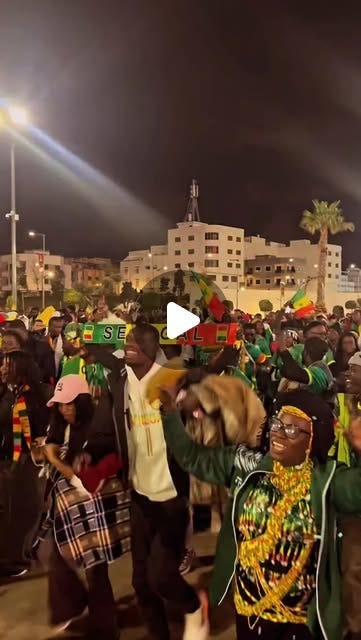
Casamance Officielle 🌴🌴♻️ on Instagram: “« Krépin Diatta Gaïn
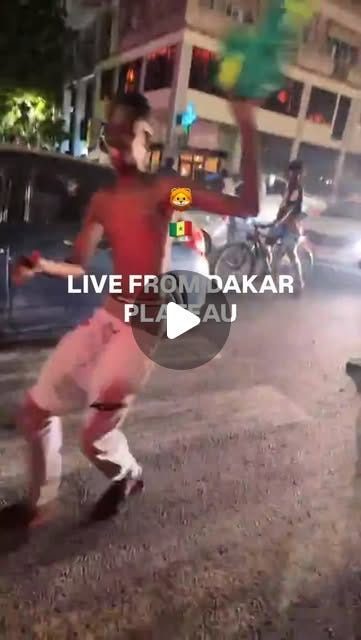
DAKAR LIVES™ | SENEGAL on Instagram: “LIVE FROM DAKAR PLATEAU
It was a sight to behold. And it reminded me once, again, just how unified this country is. But let me tell you, this spectacle of unity does not only happen when the Teranga Lions win a match. Believe me, it happens every single day in many parts of Senegal.
Senegal is the most united country I’ve ever seen, period. And this comment is coming from someone who was raised in the United States, a country that takes pride in it melting pot of diversity (or it used to…but that’s a story for another day). Senegal is a country where the people have transcended ethnic lines to embrace patriotism. They are Senegalese before they are Diola or Soninke, Muslim or Christian, Sahelian or Casamançaise. This deeply unifying patriotism is a beautiful thing that I would like to see in more African countries.
Nigeria’s team lost to Morocco this week. We had an impressive winning streak, though. I’ve heard my compatriots analyzing our teams play and one sentiment comes up often. There seems to be an agreement among my compatriots that our national football team has amazing individual players, but fail to come together as a team to win until the very end.” Dare, I propose, that this is the story of Nigeria? A nation of brilliant individuals, but…
The Senegalese dance and sing as one people
I’m a Nigerian living in Dakar, Senegal. I’ve been living here for several years now and one thing that I find remarkable about the Senegalese people is how united they are. I see the unity manifest in so many ways and there is an impressive concerted effort to keep it that way.
Nio farr is an expression I often hear people say to one another in this country. It means, we are [in it] together, in Wolof. It aptly captures the unity.
Over the decades, Senegalese musicians have written pop songs about the beauty of being Senegalese. And these patriotic songs are incredibly popular. They get played on the radio, and people actually know the lyrics! These songs get played at birthday parties, weddings, in nightclubs and people dance to them! So, these songs are not merely propaganda anthems pushed out by the government, as they are in so many other countries. For example, there’s “Beug na leen (Senegal Rekk)” by Youssou Ndour, the most internationally renowned Senegalese singer.
Then, there’s “Diame” by Julien Jouga featuring the iconic master drummer Doudou Ndiaye Rose.
I moved to Senegal for three reasons: 1) to give myself some distance from the sensitive topics I was reporting on in Nigeria 2) to learn French 3) to get back to my dancer roots which I had put aside for many years to focus on my journalism career and I knew that Senegal has a vibrant dance training ecosystem. I started going to watch the rehearsals of various professional dance companies in Senegal who specialize in traditional dances. What I saw moved me. I noticed that the dancers took pride in learning the traditional dances of ethnic groups that they were not a part of! One of the dance companies I follow very closely is Bakalama. It’s rooted in the Diola culture of southern Senegal, however, the dancers strive very hard to learn Tukulor dances, Soninke dances, sabar dances of the Wolof, Serer dances. It’s not only Bakalama who does this. Many dancers (even street performers who may focus on hip hop-inspired dance) in Senegal have a deep desire to master, or at least know very well, the traditional dances from across the country. Léopold Sédar Senghor, the country’s first president, who was also a poet, and therefore an artist in his own right, encouraged this exchange, this sharing and appreciation of art between the ethnic groups. This is uncommon in Nigeria. In Nigeria, a dancer who studies traditional dance will typically only be interested in the traditional dances of her/his own ethnic group, not of the ones from the other side of Nigeria! However, dancers in the National Troupe of Nigeria do indeed, learn the various traditional dances. And nowadays, a few cosmopolitan dance companies have started to do so as well, which I believe is a worthy initiative.
Senegal is a country of about 19.4 million people representing more than 20 different ethnic groups. More than 30 languages are spoken here, with Wolof being the lingua franca, spread through trade, migration and conquest.
Outside the country, when you meet a Senegalese national, they may tell you where in the country they grew up, but they will focus on being Senegalese.
Nigeria is a mere geographical expression: ethnicity and religious affiliation come first
This is not the case for Nigerians. In Nigeria, ethnic identification is incredibly important. It is what both divides and unites us, Nigerians, this need to distinguish ourselves by our ethnicity. Nigerians typically lead introductions of themselves by mentioning their ethnic group. (I know I do!) Then, sometimes, depending on the context, a Nigerian may go even further and mention if they are Christian or Muslim. Bringing up religious identity in a casual conversation in Senegal could be seen as strange, overzealous, divisive, unnecessary or even downright uncouth. But in Nigeria, religious identity is often used to mark one’s stance on sociopolitical issues and we frequently bring it up in casual and formal discourse. When I moved to Nigeria in 2012, after being raised in the US (where I defined myself as Nigerian), I suddenly discovered that my compatriots were quick to assert, and even remind me, that I am and am supposed to be Igbo, first. When I travel to northern Nigeria, I feel a distinct consciousness that I am not Muslim because I am othered in subtle, and sometimes overt ways.
“…my point is that the only authentic identity for the African is the tribe…I am Nigerian because a white man created Nigeria and gave me that identity. I am black because the white man constructed black to be as different as possible from his white. But I was Igbo before the white man came.” Odenigbo, one of the main characters in Chimamanda Adichie’s seminal work, Half of a Yellow Sun, makes this argument of ethnicity over modern-day nationality in a compelling conversation in the novel’s story.
You see, in Nigeria, we are acutely aware of the differences between the 200+ ethnicities that lie within the borders. In Nigeria, we often say that we (all these ethnicities) should never have been brought together as one country because our histories and philosophies and customs are not only different, but are irreconcilably incompatible. We clash in Nigeria and our ethnic diversity is a burden, a liability. We have not managed to harness it as the blessing that it could be.
“Nigeria is merely a geographical expression.” This line is often attributed to the Yoruba nationalist Obafemi Awolowo who represented the Yoruba people in Nigeria’s national arena. Other prominent figures in Nigeria have echoed similar sentiments, like Ibrahim Babangida, the former military dictator. It basically means that Nigerians are not united in a nationalistic way. It means that Chinonye, may see herself as Igbo before she is Nigerian. That Haruna may see himself as a Northern Hausa Muslim man before he sees himself as Nigerian. That Godswill would rather associate as a Niger Deltan before he would call himself a Nigerian. It means, Nigeria is lined with hundreds of cracks, running up and down, left to right, defacing the entire country.
We, Nigerians, come together only during football matches when the Nigerian Super Eagles go head-to-head with other nations. It is then that we forget who is Efik or Kanuri or Ebira or Yoruba. We are simply Nigerians, the “giant of Africa,” for 90 minutes. We unite to celebrate wins or to lament losses of our national team. When the highlights fade, we go back to our corners: Muslim, Christian, Northerner, Southeasterner, Ijaw, Hausa, and so on and so forth. This is what I knew. This is what I understand. So, imagine my total surprise and delight when I moved to Senegal some years ago.
United by blood, divided by blood
In Senegal, the unity goes beyond state patriotism. It’s in the blood. When I arrived in Senegal and got my bearings, mixing and mingling and asking lots of questions in my usual inquisitive way, I met a country where the people don’t lead by telling you their ethnic group, nor their religion (even though you can typically deduce it from their name. Fatoumata is most likely Muslim and Matthieu is probably from a Christian background).
Whenever I would probe further to ask about ethnic allegiances and divisions, I often noticed that the Senegalese would even get a bit uncomfortable by my line of questioning. It was if I was trying to poke my finger to break something that had been sealed a long time ago.
That’s when I learned that there is, in fact a seal, a bond, a deeply-woven social fabric that was intentionally created in Senegal over centuries. It was done in several ways. One way was through a custom that the Senegalese call, cousinage. The dictionary meaning of cousinage is “a relationship of cousins; kinship.” In Senegal, it’s even deeper than that. The kinship is sacred. It’s an intricate system of intermarriage between the ethnic groups that foster ties between communities. Therefore, when you meet a Senegalese person in Dakar, they may tell you that their mother is a Wolof from Waalo Waalo and their father’s lineage is Peul (Fulani) and that they have Serer cousins and their sibling is married to a Manjak. Mass public displays of violence is deeply frowned upon here. You don’t want to harm your cousin’s cousin’s sister-in-law’s cousin…you get my drift.
Many of the ethnic groups in Senegal relish in their genetic and/or cultural closeness and even greet each other with affectionate jokes when they meet each other, like the Serers and the Diolas do. There are overarching identities in Senegal that encompass wide swaths of various people, like “Wolof” and “Tukulor.” It has been said that Wolof is not a distinct ethnic group. Instead, it is a language that connects millions of people. There is truth in that. The Wolof Empire was an amalgamation of distinct pre-colonial multiethnic states (kingdoms), namely Waalo, Saloum, Baol and Kayor.
Senegalese people are fiercely proud of this cousinage, their blended lineages. This is not the case in Nigeria where many imagine constructs of ethnic homogeneity and will sustain arguments to counter narratives that suggest ethnic mixing.
“You mean you are just Igbo?” a Senegalese man once asked me.
“Yes!” I said, with a gush of ethnic pride.
“Both your parents are Igbo?” he asked.
“Yes!” I responded.
“And your parents’ parents, just Igbo?” He pressed further.
“Of course!” I said.
He looked at me with great surprise on his face, as if I was certainly wrong somewhere in the knowledge of my lineage. There, I was puffing out my chest to boast of my Igbo-ness, and to be frank, I see nothing wrong in this, as long as ethnic pride does not steer toward ethnocentrism and xenophobia. Divided from my neighbors, by blood, perhaps I am. This is hard to do in Senegal where people take pride in marrying across ethnic lines. Sure, in Nigeria, you have such marriages, but let’s be honest, the practice is not rampant, at least not in modern times. The average Nigerian (particularly in the south) doesn’t really need more than a few hands to count the number of people they personally know who married “outside” of their ethnic group. Nonetheless, we have histories of migration, conquest and intermarriage. For example, the hyphenated Fulani-Hausa identity is a long-standing one. Another example, generations ago, my father’s side, according to the oral stories, came down from Igala land to settle along the River Niger in present-day Anambra State, where they “became” Igbo through assimilation. We have these histories, but, not to nearly the same level as the Senegalese do. And the histories that we do have of such realities are often contextualized (and at times weaponized) to otherize peoples. So, my father’s people are therefore, labelled as “not real Igbos.”
One day, I was casually speaking with a Senegalese friend of mine. In the story I was telling, I said things along the lines of, “one Igbo guy called me,” and “I bought bananas from this Yoruba lady,” “my Hausa carpenter made this beautiful table…” At one moment, my friend stopped me to ask, “why are you stressing the ethnicity of your compatriots?” He was sincerely puzzled. My response, “that’s how we talk in Nigeria. What’s the big deal?” He quietly nodded, accepting that things are quite different where he comes from.
Identities shaped by colonial administrations
I am aware that colonialism plays a huge role in how the Senegalese identify themselves, versus how Nigerians do so. The French imposed direct rule on their territories in West Africa and their goal was unequivocally to spread French culture and ideals. They united their “subjects” by de-emphasizing ethnic differences on many occasions and in turn expected their “subjects” to collectively aspire to attain “French-ness.” That’s why today in French-speaking Africa (I try to avoid the term “Francophone”), you’ll find locals who are proud that they can produce a perfectly baked croissant, as good as what you’ll find in a Parisian boulangerie. Imagine, French colonial social engineering went as far as to influence the food that Africans should eat! Then, the French political ideal of laicité, which enshrines secularism, influenced governance in Senegal to some extent.
In Nigeria, the British colonial administration imposed varying degrees of indirect and direct rule. However, their objective was not to wholeheartedly spread Anglo culture. It was to extract natural resources. British colonial policy was to divide and rule, to draw attention to and even exaggerate ethnic differences.
Beyond colonialism, in Senegal, the landscape itself lends itself to a more unified social structure. Much of Senegal lies in the Sahel region, where miles and miles of sandy semi-arid terrain connect communities along plains. In such a landscape, conquest and movement is not hindered by geographical barriers that are numerous throughout Nigeria: dense forests, mountains and rocky plateaus.
“The forest breeds diversity; the desert breeds unity,” was how Dr. Abdulrazak Ibrahim, an agricultural biotechnologist from Nigeria, succinctly put it in this Facebook post.
“Oh Chika, but Senegal is just 20 million people. It’s easy to foster national unity there. Is it not the population of Lagos? Nigeria has more than 200 million people.”
I hear you.
But also know that there are countries with less than 20 million people that are still dealing with bloody ethnic rivalries. It’s not really about population size. Having said that, I do not want to make any claim that Senegal is a perfectly united nation. The unity has become a narrative taught and repeated to protect its image. There are a few ethnic groups that you’ll find in Senegal who strive to maintain a sort of “ethnic purity,” and discourage their sons and daughters from marrying “outside.” Also, you have the Casamance Rebellion which started in the 1980s as a struggle of the people of Casamance (in Senegal’s southern region), some of whom felt marginalized and slighted by the dominant people of whom their first language is Wolof. (But even that conflict was rumored to have been agitated by Jammeh in The Gambia to destabilize Senegal…a story for another day). To add further nuance, Casamance has the highest population of Christians in Senegal. Islam is the country’s most widely observed religion. Religion, as we all know, is a powerful force. It’s part of the reason why Nigeria is so divided: because it’s split 50/50, Christian-Muslim. Both sides want to maintain this equilibrium. It’s a tension that defines everyday politics in the country. If Senegal was not 90% Muslim, would we see the rise of divisions among the people?
“No,” says my Senegalese journalist friend, Momar. “We look at our blood. It’s the blood that counts. We see ourselves as Senegalese, as Africans, as black people, before we see ourselves as Muslims and Christians.”
Additionally, the leaders of Senegal’s Sufi-inspired Islamic brotherhoods make a point to respect Christian leaders. Roman Catholic and Muslim clergy in the country are often brought together on matters of national policy and discourse to symbolize tolerance. I was stunned to see Muslims in Senegal putting up Christmas trees and wearing Santa Claus caps!
Rooting for Senegal’s Teranga Lions
Regardless of the tumultuous histories that forged today’s nation-states, I wish that we would find common ground and foster unity among ourselves, especially within the lines that we live and breathe in. Too many African countries are still battling with ethnically partisan politics. I used to live in Kenya. I know the situation there, as I know how it is in Cameroon, Somalia, Ethiopia, Uganda, Guinea and Angola. We saw how Rwanda’s divisions erupted into a genocide that was unlike anything planet Earth had ever seen and the country is still trying to manage what is there. The Rwandese government strongly discourages the use of ethnic labels, so the Rwandese living in the country hesitate from identifying as Hutu or Tutsi. I get it. But I’m not saying that denying ethnicity is the solution. I firmly and absolutely believe that we have a right to be proud of our ethnic heritage. But, the trick is to not see your ethnic group as better than any other. We are equal. We truly are. I enjoy the juju music of the Yoruba and the folklore of the Hausa. I am pan-African.
I am Igbo. I am Igala…somehow. I am Nigerian. I am West African. All of these identities can exist with equal measure at the same time. Me asserting my Igbo-ness should not be a threat to the national project. In Senegal, I’ve never seen the people denying their ethnic background. They rep it without shame, and at the same time, rock their Senegalese-ness because in their minds, they are all united in some way. And surely, many families in Senegal have crisscrossing lineages when you trace them because of the legacy of cousinage.
So, I am thinking about all this on a fine afternoon here in ocean breezy Dakar. And in the meantime, I’m going to keep admiring the Senegalese model of unity because now that Nigeria is out of the first and second place positions, I’ll be rooting for the Teranga Lions to take home AFCON’s golden trophy this year. Nio farr.
Chika Oduah is a journalist, dancer and cultural researcher. She maintains a home in Dakar, Senegal and in Enugu, Nigeria and is the founder and executive director of ZIKORA Media & Arts African Cultural Heritage Organization.
 Afrocentric Confessions